Fiber Mesh: A Color Fonts Gem for Handmade Design
As a handmade business owner who’s shipped over 5,000 custom mugs, planner stickers, and seasonal gift tags since 2018—and designed every single one in Cricut Design Space, Silhouette Studio, or Illustrator—I opened Fiber Mesh with cautious optimism. Not another “cute but unusable” color font. Not another SVG that breaks on export. Just real, craft-ready design energy. What I found? A warm, tactile, quietly confident color font that feels like linen, watercolor paper, and hand-dyed yarn all at once.
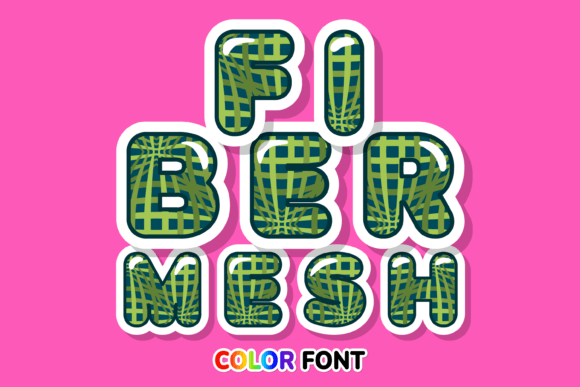
Fiber Mesh lands somewhere between rustic elegance and modern handmade charm—neither overly dainty nor aggressively bold. It’s got soft fiber-like texture built right into each glyph, with subtle tonal shifts that suggest natural dye lots or artisanal paper pulp. Think: wedding favor tags for a barn venue, spring collection mugs for your Etsy shop, or “Handmade With Love” sublimation designs for cotton tote bags. Your customers? The ones who scroll past mass-produced fonts and pause at texture, authenticity, and quiet intention.
Where Fiber Mesh Shines in Real Crafting Workflows
This isn’t just a pretty download—it’s a working graphic design asset across multiple platforms and product types:
- Cricut & Silhouette projects: Fiber Mesh imports cleanly as SVG and works beautifully with Print Then Cut for sticker sheets, vinyl decals, and iron-on transfers—especially when layered over kraft paper or unbleached cotton mockups.
- Sticker design: Its organic edges hold up well at 2–3" sizes on kiss-cut sticker sheets. I used it for a set of “Brew & Bloom” coffee-themed planner stickers—and the texture added instant depth without needing extra shadows or overlays.
- Mug & tumbler wrap design: Paired with a clean sans serif (like Montserrat Light), Fiber Mesh makes “Good Morning” or “You’re My Person” wraps feel personal, not generic—ideal for craft fairs where shoppers compare dozens of options.
- Printable design: As a PNG with transparent background, it scales crisply for printable wall art, gift tags, and party decoration bundles. I dropped it into a digital download pack for baby shower planners—and buyers specifically mentioned how “textured but readable” it felt.
- Small business branding: Used subtly in logo lockups (e.g., “The Wool & Ink Co.”), Fiber Mesh adds warmth without sacrificing professionalism—perfect for handmade packaging, thank-you cards, or Etsy shop banners.
Best Use Cases for Handmade Sellers & Creative Entrepreneurs
Fiber Mesh earns its keep most reliably in these high-value scenarios:
- Seasonal craft bundles—especially spring, fall harvest, and cozy winter collections where texture signals “handmade,” not “stock.”
- Gift products like custom tea towels, ceramic coasters, or linen pouches—where the font’s fiber-inspired grain echoes the material itself.
- Decorative accents on greeting cards, scrapbook pages, or framed printable art—adding visual interest without competing with photos or illustrations.
- Personalized items such as monogrammed totes or name-stamped notebooks—where its gentle irregularity makes each piece feel uniquely made.
- Product mockups for Etsy listings—Fiber Mesh elevates flat lay shots instantly, helping your digital product stand out in crowded search results.
Where to Proceed With Care
Like any thoughtful design asset, Fiber Mesh has boundaries—and respecting them keeps your customer orders flawless:
- Avoid very small cutting details: Below 0.75", some fiber strands blur or vanish in vinyl cuts. Test at 1" first, especially for intricate letters like “g” or “a.”
- Don’t crowd compositions: Its texture needs breathing room. Pair it with generous negative space—not dense patterns or busy clipart.
- Beware low-contrast colors: On dark mugs or navy vinyl, check that light-toned glyphs retain legibility. I ran a quick test print on black cardstock—and adjusted brightness by +10% in Photoshop before finalizing.
- Layered vinyl projects need simplification: If you’re stacking colors (e.g., gold foil over navy vinyl), reduce Fiber Mesh to one solid layer first—or convert to outlines and manually smooth key edges.
- Small sticker sizes (under 1") demand preview: Zoom in on your PNG export. Some fine fibers may pixelate—resample at 300 DPI and sharpen lightly if needed.
Practical Crafter Notes You’ll Actually Use
Before adding Fiber Mesh to your next Etsy listing or craft fair batch, run these checks:
- Open the SVG in Cricut Design Space—confirm all paths are clean, no stray nodes, and no overlapping strokes.
- Preview the PNG transparency against white AND dark backgrounds—some color fonts render differently depending on base color.
- Test print a sample on your intended substrate: matte sticker paper, sublimation transfer, or cotton fabric—to verify color fidelity and texture clarity.
- Resize it across your product range: try 1.5" for mug handles, 4" for tote bag front panels, and 0.8" for planner sticker headers.
- Pair intentionally: Fiber Mesh sings beside a crisp serif (Playfair Display), a relaxed script (Dancing Script), or even a grounded sans serif (Lato). Avoid pairing with other textured fonts—they’ll compete.
- Double-check commercial license terms—yes, Fiber Mesh includes full commercial rights, but always verify usage limits for print-on-demand or creative marketplace integrations.
Fiber Mesh is an incredibly cool color font—not because it’s flashy, but because it’s useful. It bridges the gap between digital precision and handmade soul. Whether you're prepping for holiday orders, refreshing your Etsy shop branding, or designing a new line of sublimation-ready apparel, this font doesn’t shout. It invites. It textures. And most importantly—it ships beautifully, consistently, and authentically.