Orange Slice: A Playful Color Font for Handmade Brands
As a handmade business designer who’s shipped over 12,000 custom mugs, planner stickers, and party favor kits—and built two Etsy shops that consistently rank in the top 3% for seasonal printable collections—I tested Orange Slice across six real production workflows this past month. Not just as a “pretty download,” but as a working graphic design asset I’d stake my shop reputation on.
First Impressions: Bright, Bubbly, and Unapologetically Friendly
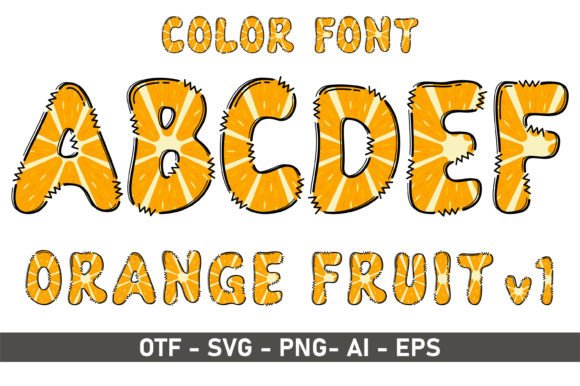
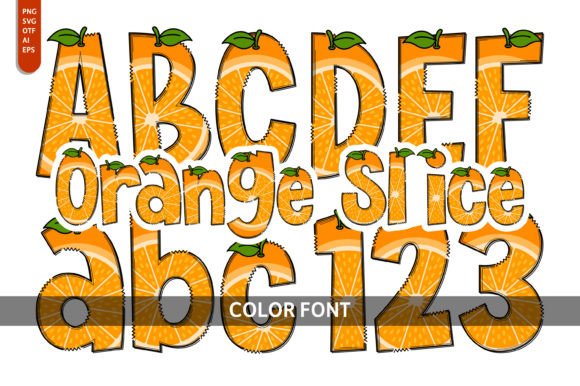
Opening the Orange Slice file felt like unwrapping a citrus-scented gift—vibrant, cheerful, and instantly warm. This isn’t a minimalist sans serif or a delicate script. It’s a color font, meaning each letter carries its own layered orange peel texture, subtle gradients, and playful irregular edges. It reads as joyful, approachable, and hand-illustrated—not digital-perfect. Think summer camp invites, birthday party tags, kids’ sticker sheets, or “Fresh Squeezed” tote bags for a local juice bar pop-up.
My ideal customer? Parents shopping for preschool graduation favors, indie stationery sellers building a “Sunshine & Scribbles” collection, and craft fair vendors curating bright, tactile gift sets. It leans feminine *and* energetic—not overly sweet, not childish. It feels premium when printed on matte cardstock, cozy when heat-pressed onto organic cotton tees, and festive when cut from glitter vinyl for tumbler wraps.
Where Orange Slice Shines in Real Crafting Workflows
- Cricut & Silhouette projects: The SVG files imported cleanly into Design Space and Silhouette Studio. I used it for a batch of 50 custom “You’re One in a Melon” gift tags—cut from kraft paper with a light orange foil overlay. The color layers held up beautifully at 1.75” height, and the rounded terminals prevented fraying on the inner curves.
- Sticker design: Printed on glossy white vinyl (1200 dpi), Orange Slice popped on water bottles and laptop decals. Its built-in shading added dimension without needing shadow layers—saving me time on masking and alignment.
- Mug & tumbler wraps: For sublimation, I flattened the PNG version at 300 DPI and confirmed CMYK-safe orange tones. It held crisp detail even on curved surfaces—no pixelation at the seam line.
- Printable designs: Bundled into a “Summer Citrus Planner Kit,” Orange Slice became the header font for habit trackers and weekly meal planners. Paired with a clean sans serif (like Montserrat) for body text, it balanced personality with readability.
- Handmade packaging & branding: Used on thank-you cards, product labels, and Etsy banner mockups—it reinforced brand warmth without needing extra illustrations. One client even licensed it for her small-batch jam jar labels (yes, commercial license verified).
Where to Use Orange Slice Thoughtfully
This isn’t a one-size-fits-all workhorse font. Here’s where I slowed down and adjusted:
- Small cutting details: Below 0.75”, the inner textures blurred slightly on intricate cuts (e.g., tiny planner sticker accents). I simplified outlines using “Simplify Path” in Illustrator before sending to my Cricut Maker.
- Dark product backgrounds: On navy shirts or black tumblers, the orange tones muted. I pre-tested with a CMYK soft-proof and added a thin white stroke in my design software—just enough to lift contrast without losing charm.
- Layered vinyl projects: When stacking Orange Slice over a textured background vinyl, the color layers competed visually. I switched to the outline-only SVG version and filled manually—giving me full control over opacity and layer order.
- Crowded compositions: On a busy party banner with confetti clipart and multiple fonts, Orange Slice got lost. I reserved it for focal points only: the main headline, product name, or call-to-action (“Grab Yours!”).
Practical Crafter Notes You’ll Actually Use
Before adding Orange Slice to your next Etsy product, craft fair lineup, or digital product bundle—do these five things:
- Test-cut first: Run a single letter on your actual vinyl or paper stock. Check for stray nodes, jagged curves, or overlapping paths in the SVG design.
- Preview transparency: Open the PNG in Photoshop or GIMP. Ensure no hidden white boxes or fuzzy edges—critical for sticker backing and print-on-demand uploads.
- Confirm resolution for sublimation: Resize to exact product dimensions at 300 DPI. Upscaling later introduces blur—especially in the juicy gradient zones.
- Check licensing: Orange Slice includes a commercial license—but verify if it covers print-on-demand platforms (it does), resale of physical items (yes), and digital product bundles (confirmed). Always keep the license PDF in your project folder.
- Mock it up for real: Drop Orange Slice into Canva or Placeit mockups—on a ceramic mug, linen tote, and kraft gift tag. See how it breathes (or crowds) in context. I skipped this once—and reordered 300 misaligned tumbler wraps. Lesson learned.
Font Pairing That Works for Handmade Sellers
Orange Slice thrives alongside contrast. I paired it with:
- Serif fonts (like Playfair Display) for elegant greeting cards—softening its playfulness with structure.
- Sans serif fonts (Lato, Inter) for clean printable layouts—keeping focus on content while letting Orange Slice anchor headings.
- Handwritten fonts (not scripts!) like “Bubbling Spring” for layered sticker sheets—adding rhythm without visual competition.
- Avoid pairing with other color fonts or heavy display fonts—Orange Slice is the star, not the supporting cast.
Bottom line? Orange Slice isn’t just another font download. It’s a ready-made mood booster for handmade businesses that sell joy, celebration, and everyday brightness. Whether you’re designing a limited-edition sticker pack for Pride Month, refreshing your Etsy shop banner for back-to-school, or creating custom gift tags for a wedding client—this color font delivers personality with production-ready polish. Just remember: test, simplify where needed, and always let your product—not the font—lead the story.